FAQ sections, and the schema that goes with them#
An FAQ earns its place by answering what the page above it leaves open. These five differ in how much they help a long question set stay readable, and one of them generates its structured data from the questions it actually renders.
The five FAQ blocks#
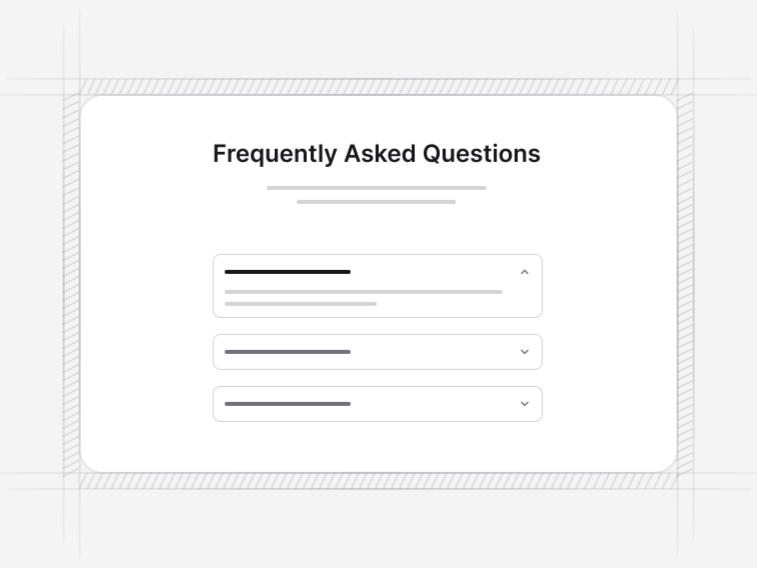
- FAQ Block 1: a bordered single-column accordion with several items openable at once. Free.
- FAQ Block 2: a single-open accordion with an underline trigger style and a two-paragraph intro.
- FAQ Block 3: a borderless two-column layout for a longer set.
- FAQ Block 4: a card-style accordion with a search field as a visual affordance.
- FAQ Block 5: a working search that highlights matches inside answers, composes with categories, and emits FAQPage structured data from the rendered list.
FAQPage structured data#
FAQ Block 5 generates its schema from the questions on the page, which means the markup and the visible content cannot drift apart. That matters because the most common structured-data error on an FAQ is publishing questions that were edited or removed months earlier.
Publish the schema on one page per question set. If the same questions appear on a pricing page and a dedicated FAQ page, mark up the one you want in results, not both.
Single-open or multiple-open#
Single-open keeps a long page short and is what FAQ Block 2 does. Multiple-open is better when people compare two answers side by side, which is common on licensing, billing and delivery questions. FAQ Block 1 does that, and the behaviour is one prop either way.
Searching inside answers#
FAQ Block 4 shows a search field as an affordance; FAQ Block 5 makes it work. The distinction that matters is where it searches: matching only question titles misses most of what people type, so block 5 searches the answers too, highlights the match inside the text and expands the item automatically.
Writing the questions#
- Use the wording people actually use, not the internal term for the thing
- Answer in the first sentence, then explain; nobody reads to the end of an accordion
- Include the awkward questions, because the page loses more from looking evasive than from a hard answer
- Link out where the real answer is longer, rather than reproducing a whole page inside a panel
- Six to ten questions on a product page; past about fifteen, use the two-column or searchable layout
Where an FAQ section belongs#
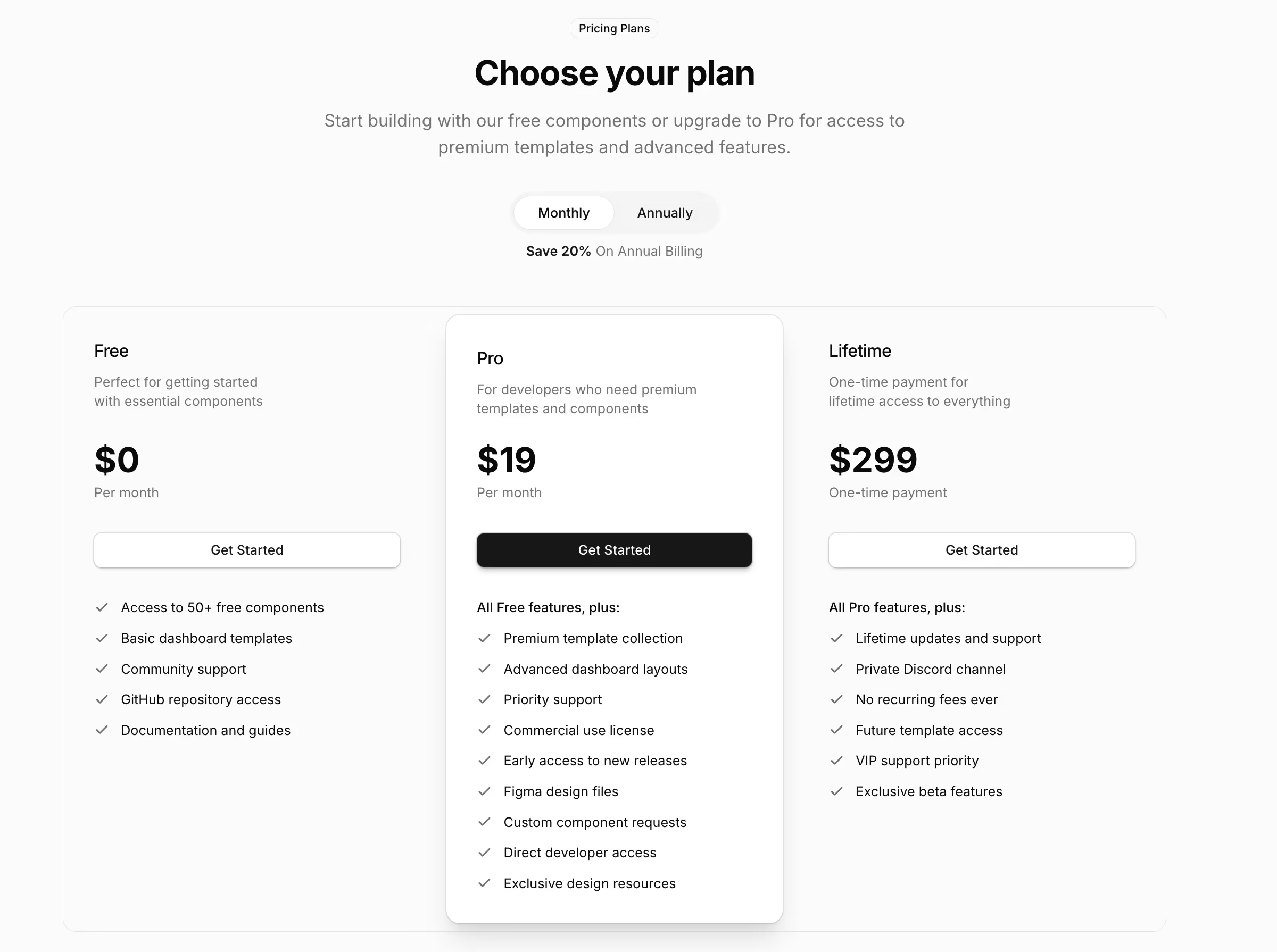
Directly under the pricing table is the highest-value position, because the questions a price raises are predictable. It also works as the closing section of a features page, and beside a contact form, where answering the common questions first measurably reduces the number of messages you have to answer twice.