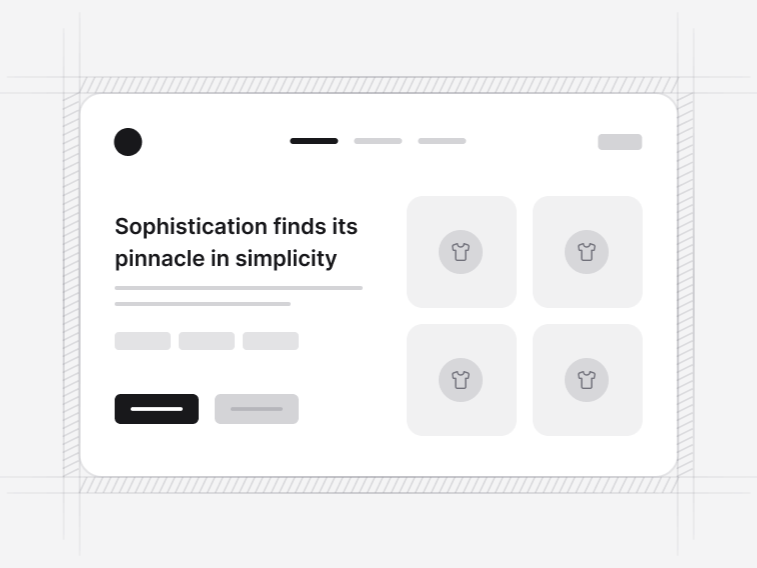
Storefront heroes, and the choice they have to make#
A shop hero decides one thing: is the visitor here to browse or here to buy. Route them into the catalogue and a broad shop works; lead with one product and a focused brand works. Doing both at once is why so many storefront heroes convert badly.
The thirteen storefront heroes#
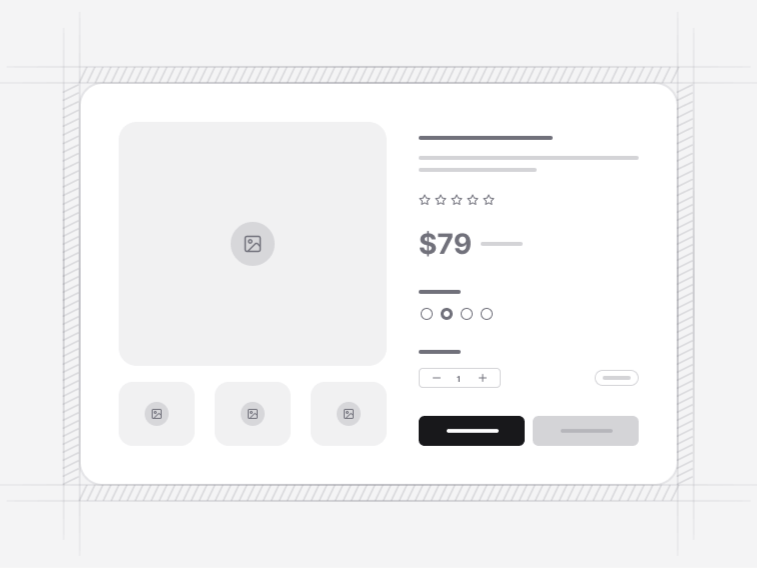
- Storefront Hero Section 1: a collection banner beside product cards a visitor can buy from without leaving the fold. Free.
- Storefront Hero Section 2: a search field above a trending product carousel, for a catalogue people arrive knowing what to look for. Free.
- Storefront Hero Section 3: a full header carrying search suggestions and a help panel.
- Storefront Hero Section 4: a hero under a promo bar, with language, location and category menus for a store that sells across regions.
- Storefront Hero Section 5: category navigation with featured deals, for a shop with departments.
- Storefront Hero Section 6: a clean featured-product layout with hover effects and nothing competing for attention.
- Storefront Hero Section 7: a seasonal featured-product hero, themed for winter and easy to re-theme.
- Storefront Hero Section 8: a tech store hero pairing featured products with a countdown.
- Storefront Hero Section 9: an editorial fashion hero whose photograph ripples under the pointer, with a look picker that cross-fades the shot.
- Storefront Hero Section 10: an interiors hero with an oversized headline the product sits on, and cursor-parallax price and spec cards.
- Storefront Hero Section 11: a sneaker drop poster with a particle field, a live countdown and colourways that recolour the frame.
- Storefront Hero Section 12: an editorial skincare hero with a numbered routine and a product stage lit by WebGL caustics.
- Storefront Hero Section 13: a bento hero crossed by one travelling light, pairing a featured product with dispatch, returns and rating facts.
Browse or buy#
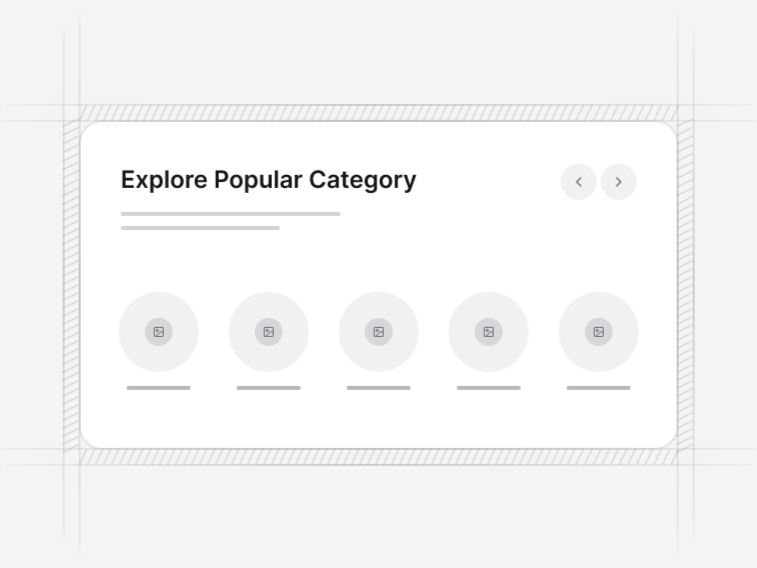
Lead with categories when a visitor arriving on the home page could plausibly want any of six departments. Lead with a product when the catalogue is narrow enough that the wrong guess costs nothing. Storefront Hero 5 is the first case, Storefront Hero 11 the second.
Drops, countdowns and dated offers#
Storefront Hero 8 and Storefront Hero 11 both carry live countdowns. Supply the end time from your own campaign data rather than hard-coding it, because a timer that outlives the offer is worse than no timer: it tells every visitor the site is unattended.
Trust signals above the fold#
Storefront Hero 13 puts dispatch, returns and rating facts in the hero itself. For a shop nobody has heard of, those three answer more objections than another product photograph, and they are cheap to state honestly. Do not print a rating you have not earned; an empty slot costs less than an invented number.
The heavy heroes#
Storefront Hero 9 ripples its photograph under the pointer and Storefront Hero 12 renders WebGL caustics. Both are campaign centrepieces rather than a shape to repeat, and both fall back to a still composition under a reduced-motion preference. They also want real photography; on placeholder imagery the effect reads as a demo.
What follows a storefront hero#
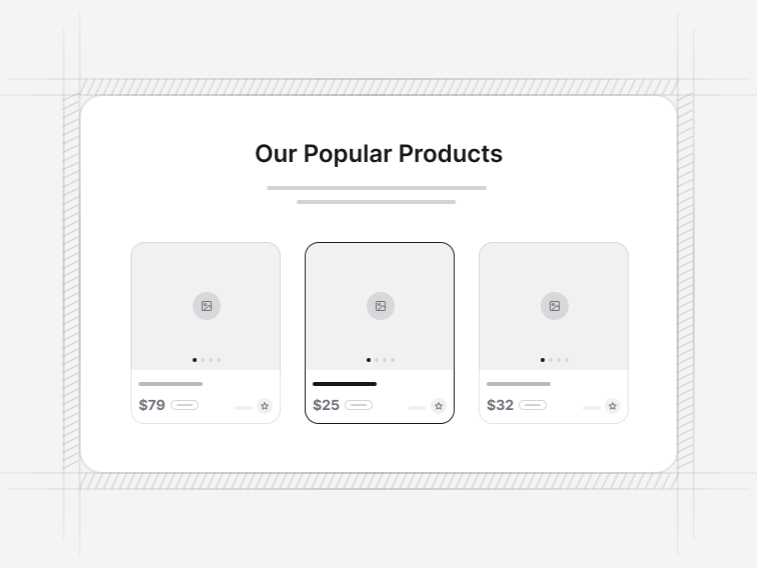
A category grid when the visitor still has to choose a department, or a product grid when the hero already narrowed it. The storefront navbar is built to sit above it, carrying search, an account menu and the cart, and a promo banner above that when there is an offer running.